
8 min read
Leadership Is Learned Through Experience, Not Observation [Part 3 - Final]

Written by
AlphaHAS Team
Many professionals spend years trying to accumulate experience before pursuing larger opportunities. They tell themselves they need one more year, one more project, or one more role before they are ready to take the next step. The assumption is understandable. Experience creates confidence, confidence creates capability, and capability creates success. At least that is how most people imagine professional growth works.
The reality is often very different.
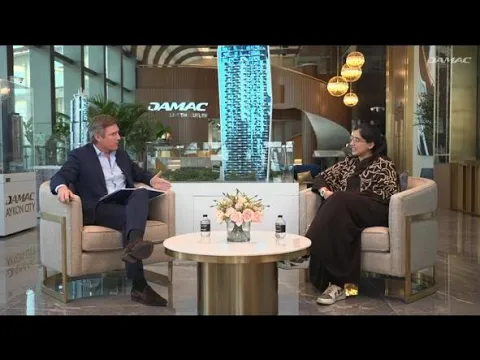
In a recent conversation, Amira Sajwani made a simple but powerful observation:
"Experience comes from being put in situations you've never dealt with before."
At first glance, the statement feels obvious. Yet it challenges one of the most common misconceptions about leadership and career growth. Many people assume experience is something they must acquire before opportunity arrives. In practice, opportunity often arrives first. Experience is what individuals gain as they rise to meet the challenge.
This pattern can be seen throughout business. Leaders are rarely promoted because they have already performed every aspect of a larger role. They are promoted because someone believes they have the potential to grow into it. Entrepreneurs do not launch businesses with complete knowledge of every challenge they will face. Executives do not make major decisions with perfect certainty. In each case, capability develops through exposure, adaptation, and learning. Experience is not the starting point. It is the outcome.
Every Leader Starts with Less Experience Than People Realize
Looking at successful leaders from the outside can create a misleading picture. Experience tends to erase the uncertainty that came before it. A confident executive in the boardroom may appear entirely at ease, even though that confidence was built through years of decisions made without perfect certainty.
Satya Nadella offers a useful example. Before becoming Microsoft’s CEO in 2014, he had led businesses across the company, most recently its Cloud and Enterprise group. Yet the chief executive role required him to move beyond leading a division and take responsibility for the direction, culture, and long-term relevance of the entire organisation.
He did not arrive in the role having already faced every challenge it would present. Instead, his earlier experience in cloud infrastructure gave him a foundation, while the wider responsibilities of the position demanded new judgment. His progression illustrates an important point: even accomplished leaders continue to build capability when the scale and nature of their responsibility changes.
Career progression rarely follows a path of complete preparedness. The people who grow fastest are usually those who recognise that uncertainty is not evidence of inadequacy. More often, it signals that they have entered a stage where meaningful learning can occur. Leadership experience is created in precisely these moments, when established strengths must be applied to responsibilities that are larger, broader, and unfamiliar.
The Biggest Career Opportunities Rarely Arrive When We Feel Ready
One of the challenges of leadership development is that confidence and opportunity do not always arrive in the order we expect. Many professionals believe they must build confidence first and pursue larger opportunities afterwards. In reality, it is often the opportunity itself that creates confidence.
A new responsibility forces someone to learn. A larger role requires the development of new skills. Greater accountability creates new perspectives. The experience gained from navigating these situations becomes the foundation for future confidence.
Waiting until every uncertainty disappears can therefore become counterproductive. The knowledge required for the next stage of growth often exists on the other side of the decision, not before it. This is why some of the most successful leaders describe their career progression not as a sequence of planned steps, but as a series of situations that required them to learn faster than they had before.
Leadership is not developed by observing challenges from a safe distance. It is developed by engaging with them directly.
Growth Happens at the Edge of Your Current Capabilities
The most valuable professional experiences are rarely the most comfortable ones. They tend to emerge when responsibility expands faster than familiarity and individuals must apply what they know to challenges, they have not faced before.
Indra Nooyi’s career offers a useful example. Before becoming PepsiCo’s CEO in 2006, she had built deep expertise in strategy and finance, helped guide major restructuring, and served as president and chief financial officer. Yet leading the entire organisation required a broader form of judgment, from shaping a global portfolio to balancing commercial performance with changing consumer expectations.
Her earlier roles gave her a strong foundation, but they could not reproduce the full weight or complexity of the chief executive position. She had to extend established strengths into a larger and less familiar arena, eventually becoming the architect of PepsiCo’s “Performance with Purpose” strategy and continuing the company’s diversification beyond its traditional core.
The lesson is not that growth requires reckless risk or unsupported responsibility. It is that meaningful development begins where routine competence ends. A larger role, an unfamiliar market, or a decision without an obvious answer creates the conditions in which judgment must expand.
Leaders who embrace this reality tend to progress further because they understand that capability grows through use. Each unfamiliar situation becomes a source of knowledge, perspective, and better judgment. The edge of current capability is not a fixed limit; it is the place where the next level of experience is created.
Learning Becomes a Competitive Advantage
In a business environment defined by change, the ability to learn quickly has become one of the most valuable leadership qualities. Markets evolve, customer expectations shift, technologies emerge, and competitive landscapes transform. Knowledge that was sufficient yesterday may be inadequate tomorrow.
This is why the strongest leaders often view themselves as continuous learners. They understand that titles do not eliminate the need for growth. Experience remains valuable, but it must be paired with curiosity and adaptability. The willingness to learn allows leaders to turn uncertainty into opportunity and challenges into development.
A learning mindset also changes how people respond to unfamiliar situations. Instead of asking whether they already possess every answer, they focus on whether they can find those answers. The distinction is significant. One perspective creates hesitation. The other creates progress.
Over time, this commitment to learning compounds. New experiences create better judgment. Better judgment improves decision-making. Better decisions create stronger outcomes. Leadership develops not through knowing everything, but through continuously expanding what is known.
Leadership Is Built Through Participation
Books can teach principles. Training programmes can introduce frameworks. Mentors can offer guidance that shortens the learning curve. All of these contribute to leadership development and should be valued. However, there are certain lessons that can only be learned through experience.
Theodore Roosevelt captured this distinction in his 1910 “Man in the Arena” speech: “The credit belongs to the man who is actually in the arena.” His point was that contribution, courage, and growth belong to those who take part, accept the possibility of error, and continue striving rather than remaining safely outside the challenge.
The same principle applies to leadership. Judgment develops through decisions. Resilience develops through setbacks. Confidence develops through responsibility. Leadership develops through participation because participation turns ideas into tested capability.
This is why the most impactful moments in a career are often the ones that initially feel intimidating. They force individuals to move beyond observation and into action, offering lessons that could not have been acquired from theory alone.
The most successful leaders are not necessarily those who begin with the greatest experience. They are often those who are willing to enter the arena, take responsibility, and learn through situations they have never encountered before.
Leadership is not learned by watching from the sidelines. It is learned by stepping forward when the outcome is uncertain, participating fully, and trusting that experience and growth will follow.
Frequently Asked Questions
Why is experience considered such an important part of leadership development?
Experience plays a critical role in leadership because it provides lessons that cannot be fully learned through theory, training, or observation alone. Real leadership challenges involve uncertainty, competing priorities, difficult decisions, and accountability for outcomes. Navigating these situations helps leaders develop judgment, adaptability, and confidence over time. While knowledge provides a foundation, experience transforms that knowledge into practical leadership capability.
Can someone become an effective leader without prior leadership experience?
Every leader starts without leadership experience. The skills associated with leadership are developed through practice rather than acquired beforehand. Many professionals assume they need to feel fully prepared before taking on greater responsibility, but leadership often develops after stepping into a challenging situation. The willingness to learn, adapt, and grow is often more important than having extensive experience from the outset.
Why do leadership opportunities often arrive before people feel ready?
Organizations typically promote people based on their potential to grow, not simply because they have already done the job before. If every opportunity required complete experience beforehand, very few people would ever advance in their careers. Leadership roles introduce new challenges that stretch existing capabilities and create opportunities for growth. In many cases, confidence is built through handling responsibility, not before accepting it.
How can professionals gain leadership experience earlier in their careers?
Leadership experience does not always require a formal leadership title. Taking ownership of projects, coordinating cross-functional initiatives, mentoring colleagues, presenting ideas to stakeholders, and volunteering for challenging assignments can all provide valuable leadership exposure. These experiences help develop communication, decision-making, and problem-solving skills while building confidence in unfamiliar situations. Small leadership opportunities often create the foundation for larger ones later in a career.

